If you have ever booked an outstation cab and then got a bill that did not match the number you had in your head, you are not alone. It is one of the most common complaints we hear on the phone at the Flywings booking desk in Mohali, and almost every time, the confusion comes down to one thing. The person booking the cab thought the per km rate they were quoted was the final price. It never is, and it is not supposed to be, but nobody explained that clearly before the trip started.
This guide is going to walk through exactly what an outstation cab fare covers, what it never covers, and why toll and parking are treated the way they are across the entire industry, not just by us. By the end you will know exactly what to expect on your final bill before you even step into the car.
The short answer
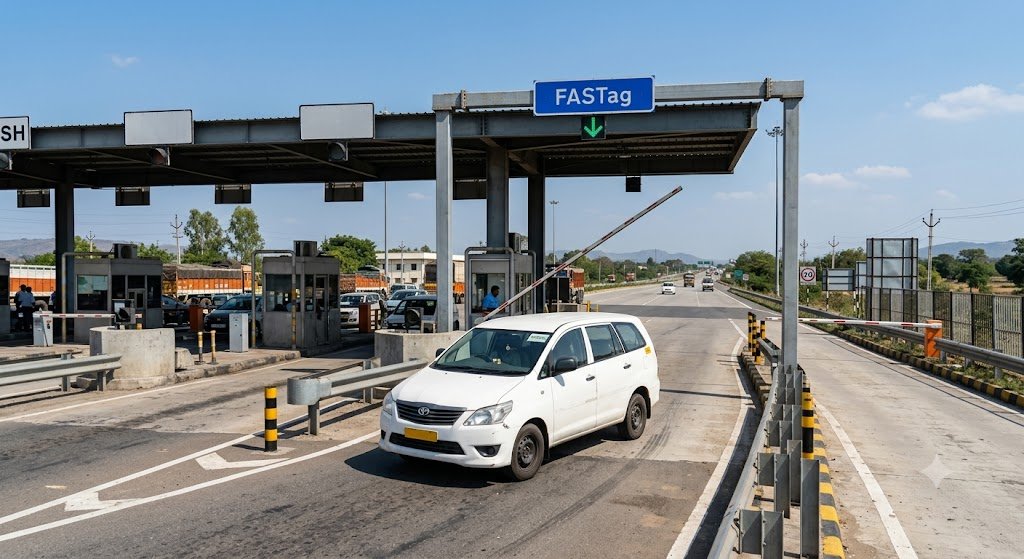
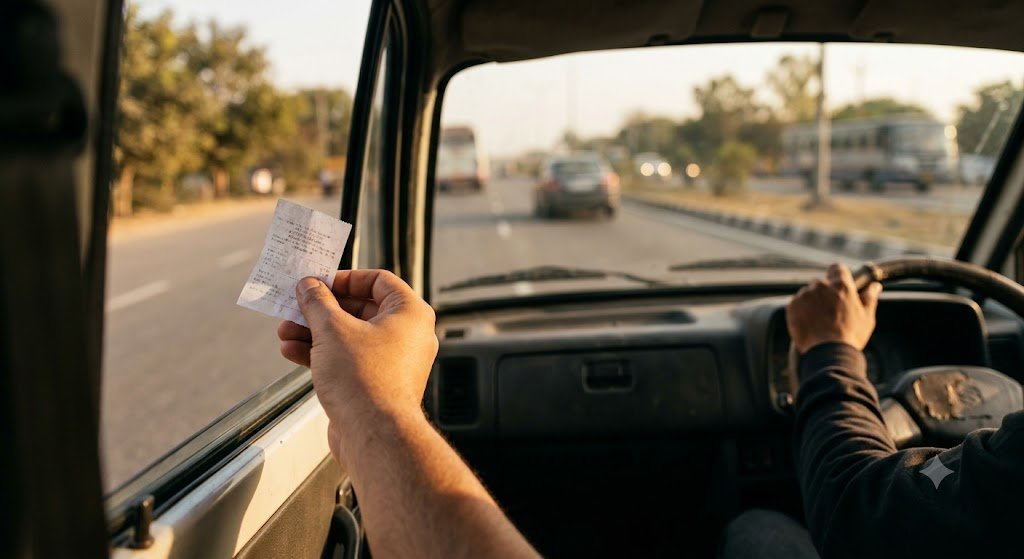
No. Toll tax and parking charges are not included in the per km rate you are quoted for an outstation taxi. This is true almost everywhere in India, whether you book through a local operator, a big aggregator app, or a travel agent. The per km rate covers the car, the fuel and the driver. Toll and parking are billed on top, at the actual amount paid on the road, usually shown to you with the receipt.
That is the one line answer. But if you stop reading here, you will still get surprised on your next trip, because the real question is not whether toll is included. It is how much it usually adds up to, and how to plan for it so nothing on the final bill feels like a shock.
Why the per km rate does not include toll and parking
Think about what a per km rate is actually built to cover. It is a rate for using the vehicle and the driver’s time and skill, over a certain distance. Fuel is tied to distance too, so it fits naturally into that per km number. A car that does 15 km per litre will burn roughly the same fuel whether you are on NH44 near Ambala or the Kalka climb toward Shimla, so fuel can be averaged into a flat per km figure without much error.
Toll and parking do not behave like that. A route with three toll plazas costs the operator a fixed rupee amount no matter which car goes through, and that amount has nothing to do with distance. Chandigarh to Delhi and Chandigarh to Katra are both long routes, but they do not cross the same number of toll booths, and the toll rates on each highway are set by the National Highways Authority of India, not by any taxi company. If an operator tried to average toll into a flat per km rate, one of two things would happen. Either the rate would be too high for short routes with no toll roads, or too low for long national highway routes with several toll plazas, and either way you would be paying for a number that does not match your actual trip.
Billing toll and parking separately, at the actual amount, keeps the per km rate honest. You pay for the road exactly what the road costs, no more and no less, and the receipt from the toll booth backs up the number on your final bill.
What is actually included in the per km rate
Before getting into what gets billed on top, it helps to be clear about what the base rate already covers. This is the part that should never change once you have a confirmed booking.
| Included in the per km rate | What this means for you |
|---|---|
| Base per km fare | The exact rate agreed for your car type, for the full distance travelled |
| Fuel charges | Petrol, diesel or CNG, whichever the car runs on, fully covered |
| Driver charges | The driver’s base fee for the trip is already built into the fare |
| AC running | Included in the plains. On hill routes the AC is usually kept off, which is standard practice and not a way to cut a corner |
| Vehicle upkeep | Servicing, tyres and general maintenance are the operator’s cost, not yours |
| GST invoice | A proper bill you can use for expense claims or company reimbursement |
If a driver ever asks you for extra money for fuel mid trip, something is wrong, because fuel is already paid for inside the fare you agreed to. That one is never a legitimate on road charge.
What gets billed separately, and why each one exists
Now for the part that actually causes confusion. These charges are real, they are normal across the whole industry, and a good operator will tell you about every single one of them before you travel, not after.
| Charge | How it is billed |
|---|---|
| Toll tax | At actual cost, shown with the toll receipt from each plaza |
| State tax and permit | Applies only when the car crosses into another state’s territory |
| Parking charges | At the actual amount paid at the parking lot or hotel |
| Night charge | Applies between 10 PM and 6 AM, since driving at night carries a higher cost for the operator |
| Driver night allowance | A fixed per day allowance on trips longer than 300 km in a single day, since the driver is away from base overnight |
| Hill and off road charge | A small extra applies on genuine hill routes, since these roads put more wear on the vehicle |
| Waiting charges | The first 30 minutes at any stop are free, after that a small hourly charge applies |
| Extra sightseeing km | Any detour off the originally planned route is billed for the extra distance covered |
None of these are hidden fees in the bad sense of that phrase. They are standard, predictable costs that any honest operator will walk you through at the time of booking. The problem only shows up when an operator stays quiet about them until the trip is already over, which is exactly the moment a customer has the least room to negotiate.
A real example: Chandigarh to Manali, round trip
Numbers explain this better than any list of rules. Here is roughly how a round trip from Mohali to Manali breaks down for a family booking an Innova Crysta, using our published starting rate of Rs 17 per km for a round trip.
| Cost head | Approximate amount | Notes |
|---|---|---|
| Distance | 310 km one side, 620 km both ways | Mohali to Manali via Kiratpur Sahib and Mandi |
| Base fare (Rs 17/km x 620 km) | Rs 10,540 | This is the number quoted upfront |
| Toll tax (both ways) | Rs 600 to 800 | Two to three toll plazas on the route, exact amount from receipts |
| Parking (per day in Manali) | Rs 100 to 200 per day | Depends on the hotel or market parking used |
| Driver night allowance | Rs 300 to 400 per day away from base | Applies since Manali is an overnight, multi day trip |
So a trip quoted at roughly Rs 10,500 for the driving itself usually lands somewhere around Rs 12,000 to 13,000 once toll, parking and the driver allowance for the days away are added in. That gap is not the operator changing the rules midway. It is the actual, receipted cost of the road and the days involved, and any operator worth booking with will tell you this range before you leave Mohali, not after you return.
A shorter example: Chandigarh to Delhi, one way
A same day, one way drop looks much simpler, because there is no overnight stay and usually only one or two toll plazas involved.
| Cost head | Approximate amount |
|---|---|
| Distance | 245 km, Chandigarh to Delhi via NH44 |
| Base fare, sedan, one way (Rs 11/km) | Rs 2,695 |
| Toll tax | Rs 300 to 400 |
| Parking | Usually nil for a straight drop, unless you ask for a stop |
On a route like this, toll is a small enough add on that most customers barely notice it. The confusion tends to happen on the longer, multi day hill trips where toll, parking and the driver allowance together can add a meaningful amount to the base fare, which is exactly why we always walk a customer through this before confirming a hill route booking.