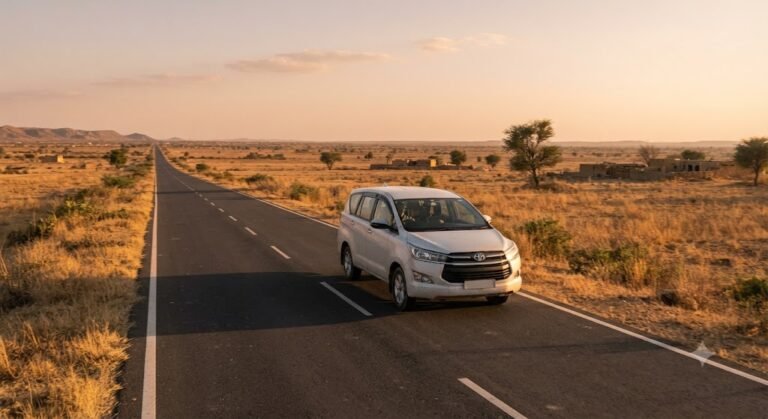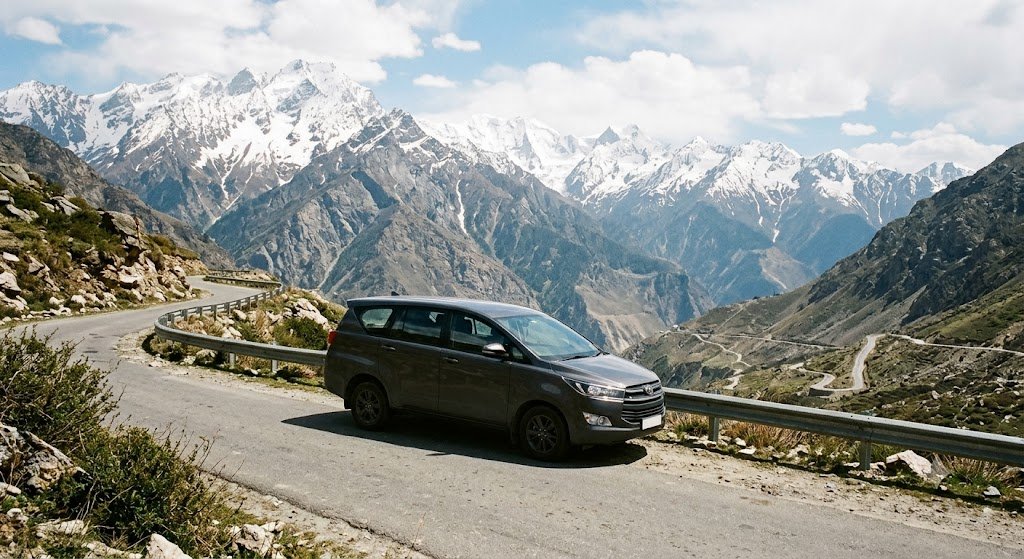
Every year around March, the calls at the Flywings desk start sounding the same. A family of four wants to do the Char Dham Yatra, they have heard the trip is long and a little confusing to plan, and the first question is almost always about cost. Not a vague “how much does Char Dham cost” but the real version: how does the pricing actually work when the car is booked for eleven days, not a fixed two city drive.
This guide answers that properly, day by day and car by car, using the same numbers we quote on the phone.
The short answer
Char Dham is not priced like a Chandigarh to Delhi drop, where you pay a rate per kilometre for a fixed distance. It is billed as a per day dedicated car hire, because the car and driver are with you for the entire eleven day circuit, not just point to point. The exact quote depends on which car you choose and the exact dates, confirmed before you book, but the car choice and the day wise plan below will tell you almost everything you need to budget for a family of four.
Why Char Dham cannot be quoted like a normal outstation trip
A route like Chandigarh to Manali has a fixed distance and a fixed one way or round trip per kilometre rate, so the fare is simple arithmetic. Char Dham does not work that way, because the car does not drive a straight line and back. It goes from the plains up to Yamunotri, down again, across to Gangotri, back, over to Kedarnath’s road end, back, further to Badrinath, and finally back down to the plains, with rest stops built in along the way. Some of that distance is genuine driving, some of it is the car sitting parked for a day while you trek to a shrine on foot. A per kilometre rate does not reflect that fairly, either to you or to the driver who is away from base for eleven straight days. A per day rate does, which is why every operator running this circuit, including us, quotes it that way.
The eleven day itinerary, exactly as we run it
This is the actual day wise plan used for Char Dham bookings out of the tricity. Knowing this in advance is what turns an abstract “eleven days” into something you can actually picture and budget for.
| Day | Plan |
|---|---|
| Day 1 | Haridwar to Barkot, driving towards Yamunotri and staying overnight in Barkot |
| Day 2 | Barkot to Yamunotri and back, drive to Janki Chatti, trek to the Yamunotri shrine and back, returning to Barkot or Uttarkashi |
| Day 3 | Uttarkashi to Gangotri and back, drive to Gangotri, a short walk to the temple, then back to Uttarkashi for the night |
| Day 4 | Uttarkashi to Guptkashi, a full driving day towards the Kedarnath base |
| Day 5 | Guptkashi to Kedarnath, drive to Gaurikund, trek up to Kedarnath for darshan and an overnight stay near the shrine |
| Day 6 | Kedarnath trek back and drive to Guptkashi, trek down to Gaurikund, drive back to Guptkashi |
| Day 7 | Guptkashi to Joshimath, driving towards Badrinath, staying overnight in Joshimath |
| Day 8 | Joshimath to Badrinath and back, drive to Badrinath, darshan at the temple, accessible by road without a trek, then back to Joshimath |
| Day 9 | Joshimath to Rishikesh or Haridwar, a long driving day back down towards the plains |
| Day 10 to 11 | Buffer and return, a rest day if the schedule needs it, then the drive home to the tricity |
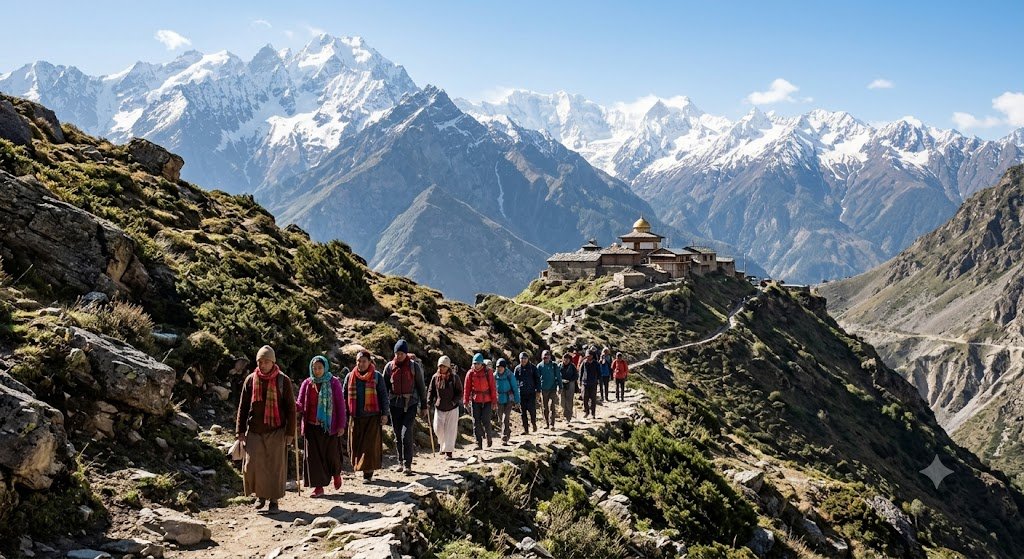
Notice that Yamunotri and Kedarnath both need a trek or pony ride from the last point the road reaches, while Gangotri and Badrinath are accessible directly by car right up to the temple. That difference matters for a family with young children or elderly members, since two of the four shrines involve real physical exertion and two do not.
Which car actually suits a family of four for eleven days
Eleven days is a long time to be in the wrong car, so this decision matters more here than on a short trip. Here are the options that make sense for a family of four, with real seat and luggage numbers.
| Car type | Seats | Luggage | Round trip starting rate | Why it works or does not for this trip |
|---|---|---|---|---|
| Sedan | 4 | 3 bags | Rs 10 per km | Fits four people exactly, but eleven days of luggage for four leaves the boot and cabin cramped |
| SUV / MUV | 6 | 4 bags | Rs 13 per km | Comfortable step up, more legroom for the long hill stretches between shrines |
| Innova Crysta | 7 | 4 bags | Rs 17 per km | Our most recommended car for this exact trip, higher ground clearance and seating that handles the mountain roads better than a sedan |
For a family of four, the Innova Crysta is the car we point most people towards, not because it is the most expensive option but because the Char Dham roads genuinely reward a taller, sturdier vehicle. Narrow hill stretches, occasional loose surfaces near Gangotri and Kedarnath’s road end, and eleven days of repeated up and down driving all favour a car built for exactly this kind of route.
What the road actually costs before the per day hire begins
Most families start this trip from the tricity, so the first real number you can plan around is the drive up to the Char Dham gateway region. Chandigarh to Dehradun, the nearest major gateway on our regular route list, covers 165 km and takes around 4 hours by road.
| Car type | Round trip rate | Approximate cost, Chandigarh to Dehradun and back, 330 km |
|---|---|---|
| SUV / MUV | Rs 13 per km | Around Rs 4,290 |
| Innova Crysta | Rs 17 per km | Around Rs 5,610 |
This figure is only the plains leg to and from the gateway region. It gives you a real, grounded number to anchor your budgeting on, before the per day hire for the actual eleven day hill circuit takes over. We fold this into a single quote once you tell us your dates, rather than billing it as a separate trip.
What actually goes into the per day rate
Once the car crosses into the hill circuit itself, from Haridwar onward through all four shrines and back, the per day dedicated hire rate applies for every one of those eleven days, whether the car is driving six hours or parked for the day while you trek to Kedarnath. This is standard practice across every operator running this circuit and it exists for a fair reason, the driver and vehicle are committed to your family alone for the full duration, turning down every other booking that would otherwise fill those days.
- Car and driver for all eleven days, including days the car sits parked at a base point while you trek to a shrine
- Fuel for the entire circuit
- Driver night allowance, since this is a multi day outstation trip where the driver stays away from base overnight for the whole duration
- Toll on the plains stretches, charged at actuals with the receipt
- Parking at each base point, generally charged at actuals
What the per day rate does not cover is anything at the shrines themselves. Pony or palki hire for the Yamunotri and Kedarnath treks, helicopter tickets if you choose to fly part of the Kedarnath leg instead of trekking, hotel stays each night, and food along the way are all separate and paid locally, exactly the way they would be on any pilgrimage trip regardless of which operator drives you there.
The two treks that change your family’s plan the most
Yamunotri and Kedarnath are the two shrines that involve real walking, and for a family of four this is worth planning around honestly rather than assuming everyone manages the same way.
The Yamunotri trek from Janki Chatti is roughly 5 km each way on a paved path, manageable on foot for most reasonably fit adults and older children, with pony and palki options available at the base for anyone who prefers not to walk it.
The Kedarnath trek from Gaurikund is longer, around 16 km each way, and this is the one that most families end up arranging a pony, palki or helicopter for rather than walking in full, particularly if young children or elderly grandparents are part of the group of four. Helicopter seats for the Kedarnath leg are limited and weather dependent, so if that is your plan, book it as early as possible and keep the pony or palki option in mind as a backup.