Almost every article on Spiti Valley assumes you ride a bike. Open any travel blog on the subject and within the first paragraph someone is talking about Royal Enfields, riding gear and fuel stops on the Manali side. If you do not ride, and you have no plan to learn before your trip, most of what is written online quietly stops being useful to you.
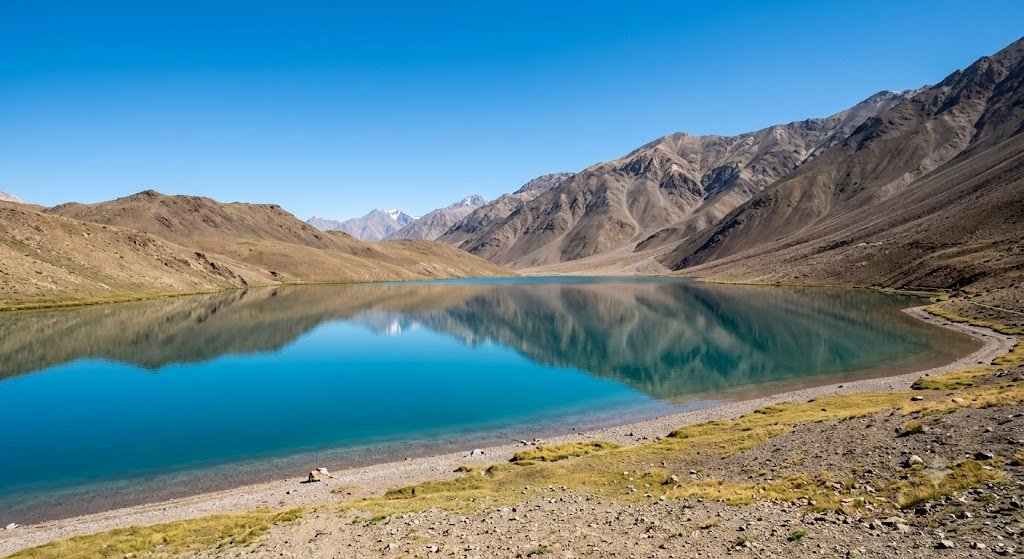
This is one of the most common questions we get from families and couples planning a Himachal trip through the Flywings desk. They have seen the photos of Chandratal Lake and the monasteries at Tabo and Key, and they want to go, but nobody in the group rides a motorcycle. The good news is that Spiti was never a bike only destination. It only looks that way online because bikers write about it the most.
The short answer
Yes, you can reach Spiti Valley completely comfortably without a bike, by private taxi or a shared cab, entering through Shimla and the Kinnaur valley rather than the Manali side. This route is fully motorable by any regular car or SUV, does not need any riding skill, and is in fact the route we recommend even to customers who do ride, because it acclimatises you to altitude gradually instead of throwing you into high passes on day one.
Why Spiti reads like a biker only place
Two things created this impression. First, the Manali to Kaza road over Rohtang and Kunzum Pass is genuinely popular with bikers because it is short, dramatic and bragging rights worthy, so a huge share of the content about Spiti comes from that specific crowd. Second, this Manali side road is also the rougher, higher altitude, more weather dependent of the two ways in, which suits an adventure biking narrative more than a family road trip one.
The Shimla side entry, through Kinnaur, barely gets written about in comparison, even though it is the more comfortable and more scenic of the two routes for anyone in a car.
The two ways into Spiti, compared honestly
| Route | Entry point | Best suited for | Road character |
|---|---|---|---|
| Shimla to Kinnaur to Kaza | Chandigarh or Mohali directly | Cars, SUVs, families, first timers | Gradual climb, better maintained, gentler altitude gain |
| Manali to Kunzum Pass to Kaza | Usually done from the Manali side | Bikers, experienced hill drivers | Steeper, higher pass, weather dependent, open a shorter season |
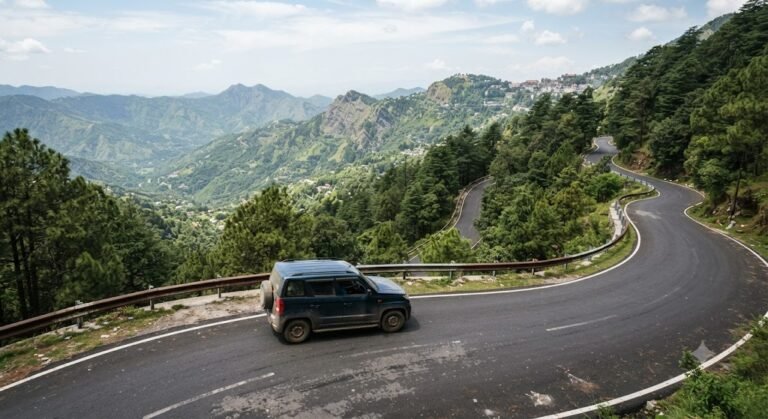
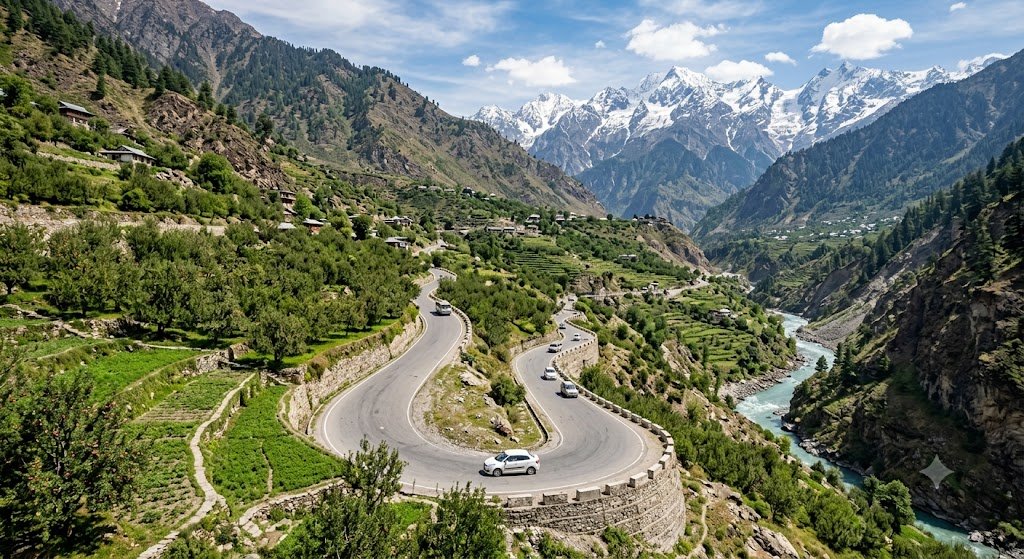
For anyone starting from Mohali or Chandigarh, the Kinnaur route is also simply the more direct one. You are not adding a detour through Manali at all, you drive north through Shimla and follow the Sutlej river valley into Kinnaur, then cross into Spiti near Nako.
What the route actually looks like by taxi
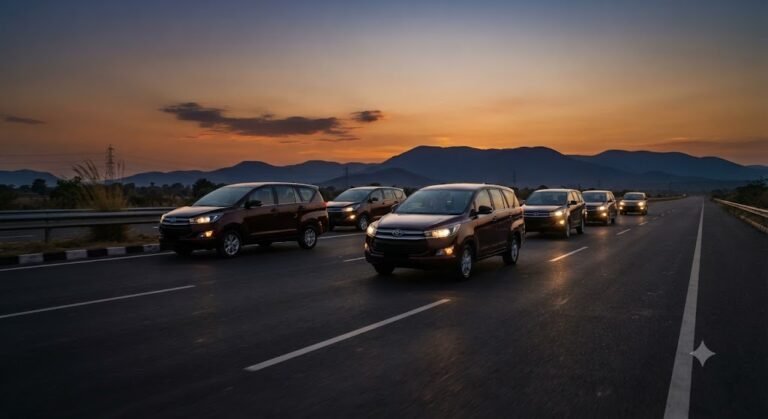
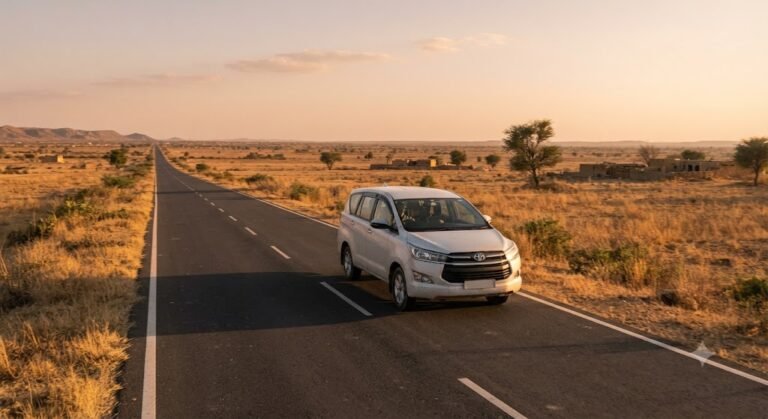
Our Spiti Valley Circuit package runs this exact way, and it is built as an 8 day, 7 night trip in a dedicated SUV or Innova Crysta with a driver for the whole circuit, not a per day car swap. Here is roughly how the days break down.
| Rough stage | What happens |
|---|---|
| Chandigarh or Mohali to Shimla and on to Kinnaur | First real overnight stop in the Kinnaur belt, usually Kalpa or Sangla, both a comfortable single day’s drive |
| Kinnaur into Spiti | Cross into Spiti near Nako, continue to Tabo, home to one of the region’s oldest monasteries |
| Tabo to Kaza | Kaza is the main town in Spiti and the natural base for a day exploring Key Monastery and the villages around it |
| Kaza to Chandratal | The lake most people are actually chasing when they say they want to see Spiti |
| Return via Kunzum Pass to Manali | The circuit exits the way bikers enter, then continues back to Chandigarh through Mandi |
Notice the shape of this. You go in gently through Kinnaur and come out, if the pass is open, through Kunzum toward Manali. That order matters more than people realise, and it is the second reason a taxi through this route beats a bike trip for most travellers, not just the non riders.
Why entering through Kinnaur is actually the smarter choice, not just the easier one
Altitude sickness is the real risk on any Spiti trip, not the driving itself. Kaza sits at roughly 3,800 metres, and Chandratal is higher still. The Kinnaur route climbs gradually over two to three days, giving your body time to adjust before you reach the highest points. The Manali route, by contrast, takes you from around 2,000 metres to over 4,500 metres at Kunzum Pass in a single push, which is a much sharper jump and a genuine reason some travellers on that route feel unwell.
So the route we recommend to people who cannot or do not want to ride a bike happens to also be the medically sounder way to see Spiti. That is not a coincidence dressed up as a sales pitch, it is simply how the geography works.
Do you need any special permit
For Indian citizens, no inner line permit is required for the standard Kinnaur to Spiti to Manali circuit any more, this restriction was relaxed some years ago for the areas most travellers actually visit. Foreign nationals still need to check current requirements for specific stretches near the border areas, and this is one thing worth confirming with your operator before you travel, since rules here can change.
What car actually handles this route
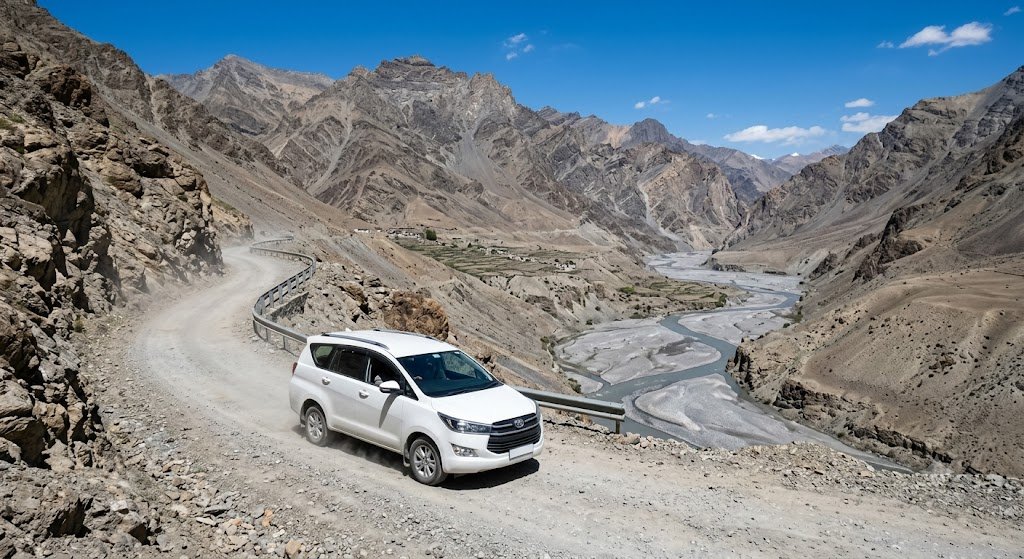
This is not a route for a hatchback or a regular sedan. The roads through Kinnaur and Spiti are narrower and rougher than our other hill packages, with sections of loose gravel and occasional water crossings during the melt season. We book this circuit only in an SUV or an Innova Crysta, both of which have the ground clearance and stability the terrain genuinely needs.
| Car type | Suitable for Spiti | Why |
|---|---|---|
| Hatchback or sedan | No | Ground clearance too low for the rougher stretches |
| SUV (Ertiga, Marazzo class) | Yes | Enough clearance and stability, our standard recommendation |
| Innova Crysta | Yes | Same reasons, plus more comfort and luggage room for a longer trip |
This is billed as a dedicated per day car hire for the full circuit, not a per km rate, since the vehicle and driver are with you continuously for all 8 days rather than dropping you and returning. The exact quote depends on the car you choose and confirmed dates, and we always confirm it in writing before you book.
What a typical day on this route actually feels like
It helps to know what you are signing up for beyond a list of place names. The first day out of Mohali is the longest stretch behind the wheel, climbing steadily from the plains through Shimla and further into the hills toward Kinnaur. Most groups feel the altitude change gently here, nothing dramatic, just cooler air and thinner cloud cover as the day goes on.
By the second or third day, once you are through Kalpa or Sangla and crossing into Kinnaur proper, the landscape changes completely. Apple orchards give way to bare rock and river gorges, and this is usually the point where people say the trip started to feel like Spiti rather than just another hill drive. Tabo, with its centuries old monastery, is often the first place travellers slow down and actually want to stay an extra hour rather than move on.
Kaza itself is a small, functional town rather than a scenic destination on its own, and most groups use it as a base for day trips to Key Monastery and the villages of Langza, Hikkim and Komic nearby, all of which sit at altitudes that make the short walks between them feel more tiring than the distance alone would suggest. Chandratal, the last major stop before the Kunzum crossing, is where most people take the photo that made them want to come here in the first place, a still, turquoise lake ringed by bare mountains with almost no tree line in sight.