24x7 Available All India Service Mohali Phase 7
Chandigarh to Katra: Overnight Taxi vs Day Train, Is Driving Actually Better?

Chandigarh to Katra: Overnight Taxi vs Day Train, Is Driving Actually Better?

SK By Sukhjinder Kaur 12 min read
Share

Since the railway line reached all the way to Katra, this question comes up far more often than it used to. A direct train sounds appealing on paper, no driving, no hill roads, no traffic to worry about, and a fixed schedule you can plan the rest of your trip around. A taxi sounds like more effort for the same journey. Having actually sent hundreds of families to Katra by road, here is the honest comparison, not a sales pitch for the option we happen to offer, covering where each genuinely wins and where it does not.

The short answer

Both options genuinely work, and which one suits you depends more on your group and your luggage than on which is objectively better. A taxi wins on door to door convenience, flexible timing and comfort for a group travelling together with luggage. A direct train wins on fixed scheduling for a solo traveller or a couple, and on cost per person for a very small group with no luggage flexibility needed. For a family, especially with elderly parents or young children, a taxi is almost always the more comfortable choice, and that is not just us saying so because it is what we sell.

The road option, in real numbers

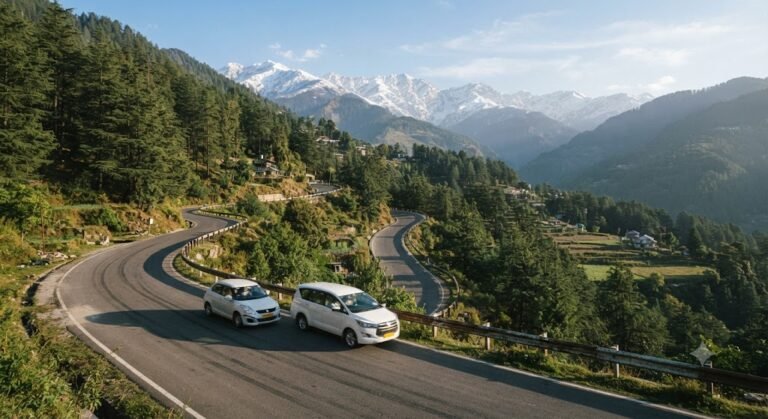
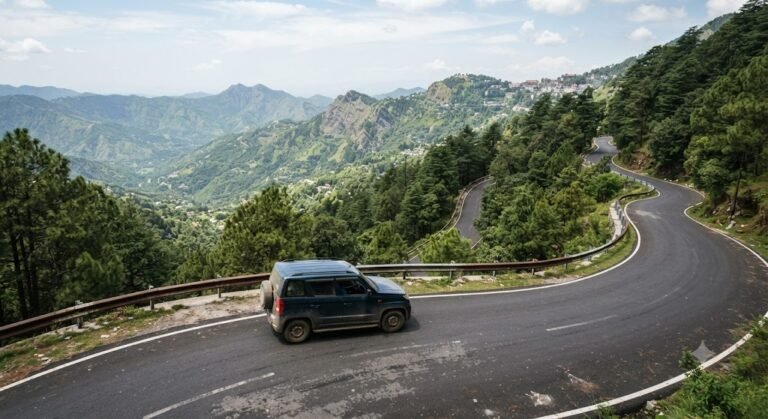
Chandigarh to Katra covers 360 km and takes around 7 hours by road. This is a single continuous drive, door to door from your home or hotel in the tricity straight to your hotel in Katra, with the driver stopping when you actually need a break rather than at a fixed station.

Option Distance and time What it actually involves
Taxi, door to door 360 km, about 7 hours One continuous journey, your own pace, stops when you need them
Direct train to Katra A fixed scheduled journey, varies by train Station arrival time, platform walk, then a local taxi or auto to your actual hotel

See our Chandigarh to Katra taxi page for the exact fare by car type on this route.

Door to door versus station to station

This is the single biggest practical difference, and it is easy to underestimate until you are actually doing it with bags and tired family members. A taxi picks you up at your home or hotel and drops you at your hotel in Katra, nothing in between. A train takes you station to station, which means you still need transport from the Katra railway station to your actual hotel, carrying your own luggage through the station in between. For a solo traveller with a backpack this barely matters. For a family with suitcases, especially with elderly parents who tire on stairs and platform walks, this extra step adds up to real fatigue before the trip to the shrine has even started.
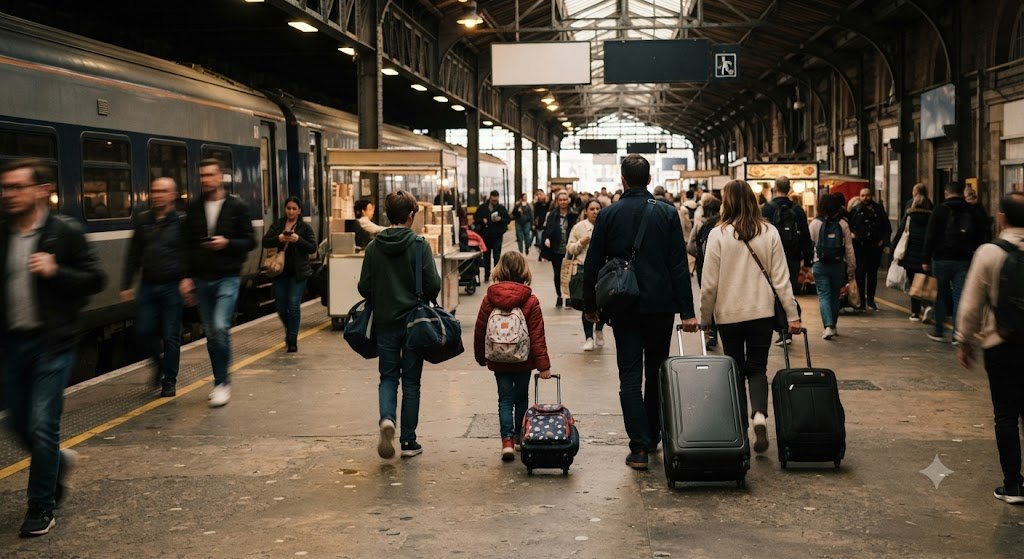
Family with suitcases walking through a busy railway station platform

Flexibility of timing

A train runs on a fixed schedule, which is genuinely convenient if that schedule happens to suit you, you know exactly when you leave and exactly when you arrive, and there is a certain calm in that certainty. A taxi works the other way, the departure time is entirely yours to set, which matters more than people expect once real life intervenes, someone in the family is running late, the weather looks bad for an early start, or you simply decide you want an extra hour of sleep before a long journey. With a taxi, that is your call. With a train, you either make the departure or you do not.

Comfort for elderly parents or young children

This is where the comparison tilts most clearly towards the road option for a lot of our customers. A train journey, even a direct one, still involves getting to the departure station, managing platforms and steps, and the general unpredictability of shared public transport, however short the actual ride. A taxi removes almost all of that, elderly parents get in the car at home and get out at the hotel, with stops exactly when they need them rather than whenever the train happens to pause. If you have already read our guide on taking elderly parents to Vaishno Devi without trekking, the same logic that applies to the climb itself applies just as much to how you get to Katra in the first place.

Cost, for a family versus a solo traveller

This is the part where the honest answer genuinely depends on your group size. A train ticket is priced per person, which can work out cheaper for one or two solo travellers with no luggage to speak of. A taxi is priced per vehicle regardless of how many people are in it, up to the car’s seating capacity, which means the per person cost drops sharply as your group grows. A family of four or five splitting one taxi fare is very often paying less per head than the same group would on individual train tickets, once you also account for the local transport needed at the Katra end to actually reach the hotel.

Group size Which option tends to work out better
Solo traveller or a couple, light luggage Train can work out cheaper per person, if the schedule suits your dates
Family of four or more, normal luggage Taxi usually works out better per person once door to door convenience and local transport at the Katra end are factored in
Any group with elderly parents or young children Taxi, regardless of the cost comparison, simply for the comfort and lack of transfers

Luggage, and why it matters more on this specific trip

A Vaishno Devi trip often means more luggage than a typical weekend getaway, warm layers since Katra gets cold in the evenings, offerings, and sometimes a change of clothes for the climb itself if you are not travelling light. A taxi has a boot that does not care how many bags you bring, within reason for the car type you book. A train imposes real limits on what you can comfortably carry through a station and onto a platform, which is worth considering honestly before you commit to the train option for a family trip.

What an overnight taxi journey actually feels like

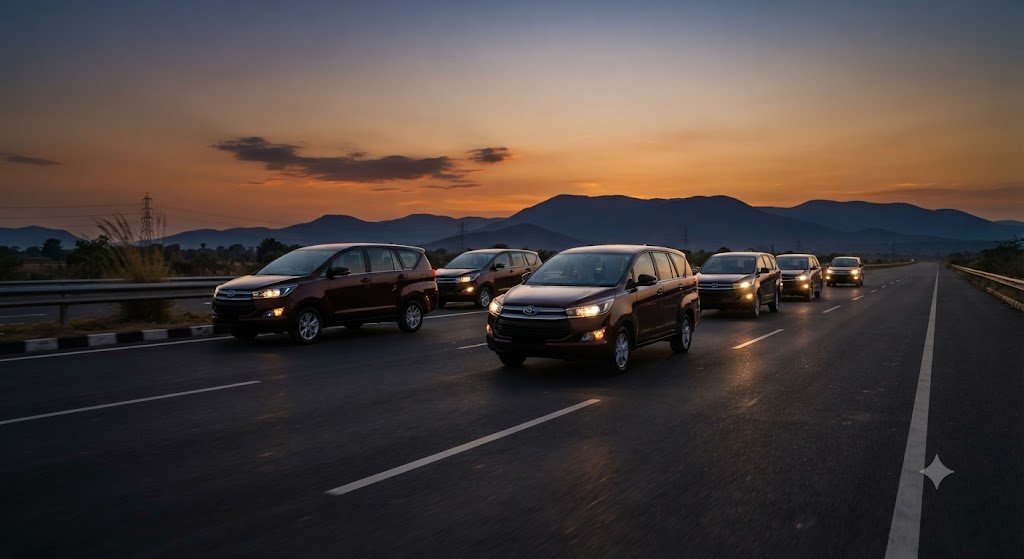
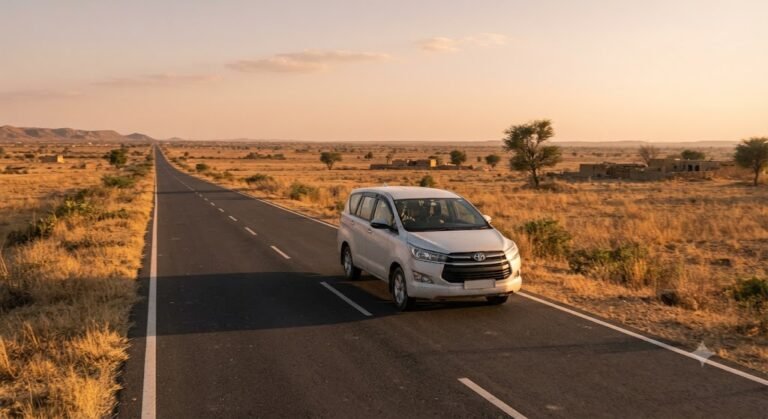
Some families specifically choose an overnight departure by road, leaving the tricity in the evening and arriving in Katra in the early morning, which avoids losing a full day to travel and means you arrive ready to start rather than needing a rest day first. This works well with an experienced night driver and a car suited to the route, and it is one of the genuine advantages a taxi has over a train, you decide whether you want a day departure or an overnight one, rather than being limited to whatever schedule exists for that specific train service.
What the train option genuinely does better

It would not be an honest comparison without saying plainly where the train wins. For a solo traveller or a couple with light luggage, happy to manage the station to hotel transfer themselves, and whose dates line up with a convenient train schedule, it can be a comfortable and cost effective option. The fixed schedule also removes any uncertainty about departure timing, which some travellers genuinely prefer over the flexibility a taxi offers. If that description matches your trip better than the family scenario above, the train is a perfectly reasonable choice, and we would rather tell you that honestly than pretend there is no good reason to consider it.

Which car suits the road option for this route

At 360 km and roughly 7 hours, this is a genuine multi day outstation trip rather than a short local hop, and the car choice matters.

Car type Best suited for
Sedan A couple or small family with normal luggage
SUV A family of five or six, more comfortable over the long single leg
Innova Crysta A full family group with luggage, our most common recommendation for this route

What families who tried both have told us

A number of our repeat customers have done this trip both ways across different visits, which makes their comparison genuinely useful rather than a one time impression. The pattern that comes up most is that the train felt fine in isolation but the station to hotel transfer at the Katra end was the part nobody warned them about, a tired family managing bags through an unfamiliar station after a long journey, right before they still needed to check in and rest before the climb. Families who switched to a taxi on their second visit consistently describe the difference as being less about the hours spent travelling and more about arriving at the hotel door already done, with nothing left to manage.

The return leg deserves the same thought as the way there

Whichever option you choose for the outbound journey, it is worth planning the return with the same care rather than assuming it mirrors the trip up automatically. After a climb, even an easier one by helicopter or palki, most people are more tired than expected, and a return journey by train means managing the station transfer again on top of that fatigue. A taxi booked as a round trip has the same car and driver waiting, with no separate arrangement needed, which is exactly why most of our Katra bookings are round trips rather than a one way drop with the return figured out later.

Booking a round trip versus arranging the return separately

If you are travelling by taxi, booking the full round trip upfront, rather than a one way drop and a separate return later, is both simpler and usually cheaper, since the round trip per km rate is lower than booking two one way legs. It also means you are not trying to arrange a car from Katra on short notice at the end of your trip, when you would rather be resting than making phone calls. See our one way versus round trip cost comparison for exactly how the two are priced against each other.

Planning the stay once you reach Katra

Whichever way you travel to Katra, the same planning advice applies once you arrive, do not attempt the climb the same day you arrive after a long journey. Rest for at least part of a day before heading up, and build in a buffer on both ends of the trip rather than a tightly packed single day that tries to combine travel and darshan together. This matters slightly more for the road option simply because a 7 hour drive, however comfortable, still deserves a proper rest before the climb itself.

How this works with Flywings

We run the Chandigarh to Katra route regularly, as a day departure or an overnight drive depending on your preference, in a car sized to your group. We will tell you honestly if your group and luggage suit the road option better than the train, or if a solo or couple trip with the right schedule might actually suit the train just as well. See our Chandigarh to Katra taxi page for the route details and fare by car type, or our round trip outstation cab page for how multi day billing works if you are staying a few nights.

If you are planning a Vaishno Devi trip and want an honest read on whether road or rail suits your group better, message us on WhatsApp with your group size and dates and we will tell you straight.

Frequently asked questions

Is a direct train to Katra actually cheaper than a taxi?
For a solo traveller or a couple with light luggage, often yes. For a family of four or more, a taxi usually works out better per person once door to door convenience is included.

How long does the drive from Chandigarh to Katra take?
About 7 hours over 360 km, a single continuous door to door journey.

Is the train more comfortable for elderly parents?
Generally no, since it still involves station transfers, platform walks and a separate local ride to the hotel at the Katra end. A taxi removes all of that.

Can we choose an overnight taxi departure instead of a day drive?
Yes, this is a common choice specifically to avoid losing a full day to travel, arriving in Katra in the early morning ready to rest before the climb.

Does luggage really make that much difference between the two options?
Yes, a taxi’s boot space is far more forgiving than what you can comfortably manage through a station and onto a platform, particularly for a family trip with warm layers and offerings.

Which car do you recommend for a family going to Katra?
An Innova Crysta for a full family group with luggage, an SUV for a mid sized group, or a sedan for a couple with normal luggage.

Should we rest before attempting the climb after a long journey?
Yes, regardless of how you travelled to Katra. Build in at least part of a day to rest before the climb rather than combining travel and darshan into one exhausting day.

Is the train ever the better choice over a taxi?
Yes, for a solo traveller or couple with light luggage and a schedule that lines up well, the train can be a genuinely good option.

Should we book the return journey as part of the same taxi booking?
Yes, a round trip booked upfront is simpler and usually cheaper than a one way drop followed by arranging the return separately once you are already in Katra.

What do families who have used both the train and a taxi say afterward?
Most say the actual travel time felt similar, but the station to hotel transfer on the train side was the tiring part they had not planned for. A taxi avoids that transfer entirely.

The one thing to remember

Neither option is universally better, the honest answer depends on your group size, your luggage and how much you value door to door convenience over a fixed schedule. For most families, especially with elderly parents or young children, a taxi removes enough friction at the Katra end to be worth it on comfort alone, cost comparison aside. For a solo traveller or a couple whose dates and schedule line up well, there is no shame in taking the train either, it is simply a different trip for a different kind of traveller.

Share

Ready to Plan Your Next Trip?

Talk to our booking desk and get a transparent, itemised fare for your route.

Enquire Now Call +91 99144 11033
Call Now
Visit Us

Our office is in Mohali Phase 7

We are a real business with a real address, not a phone number that stops answering. Drop in, or just call and we will sort the trip out.

A sister concern of Flywings Tour & Packages Pvt. Ltd.

Call WhatsApp Book Now